








Canada Hits Back
August 24, 2026
The Bank of Canada’s Surprisingly Hawkish Turn
September 8, 2026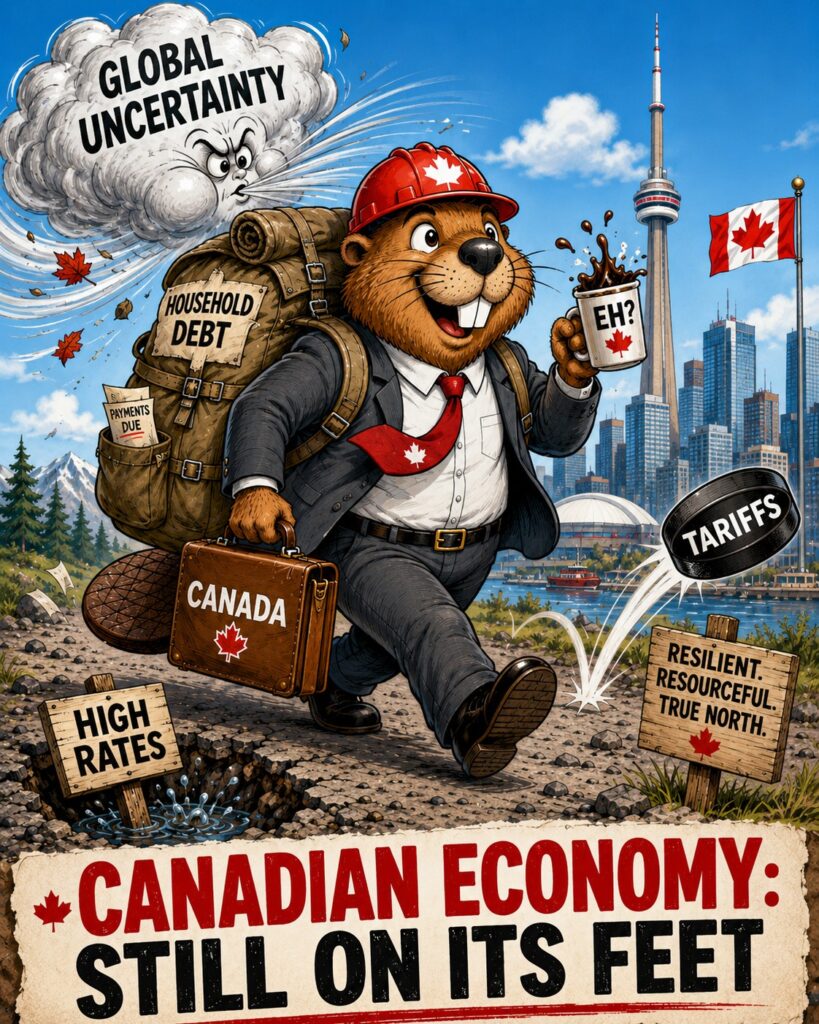
 Last week Statistics Canada confirmed that our Gross Domestic Product (GDP) grew by 0.8% in Q2 on a quarter-over-quarter basis (3.3% annualized).
It also revised its previous estimate for the quarter-over-quarter change in our Q1 GDP from -0.1% to +0.1%. That revision means our economy was not, in fact, in recession over the period from Q4 2025 to Q1 2026.
Our Q2 GDP data showed strength across the board:
- Exports showed a nice surge (+4.7% annualized).
- Stronger domestic demand (+3.9% annualized) was supported by rebounds in both residential and business investment.
- Consumer spending increased by 3.3% (annualized), up from 2.4% in Q1, despite the drag from higher gasoline prices.
- Our household saving rate also increased from 3.3% to 3.7% (annualized), confirming that last quarter’s growth in consumer spending wasn’t underpinned by increased borrowing.
- Inventory levels declined in Q2. That confirms our overall GDP growth rate of 3.3% wasn’t inflated by companies piling up unsold goods.
Alas, it appears the encouraging momentum from Q2 may be short lived:
- Stat Can’s flash estimate for our GDP growth in July was flat. (Reminder: Our GDP prints lag because it takes time for Stats Can to compile the data.)
- The recent escalation of the US trade war has increased uncertainty for both businesses and consumers.
- The latest round of US tariffs will exert additional drag on our GDP growth going forward.
Our GDP growth of 3.3% was well above the Bank of Canada’s (BoC) forecast of 2.5%.
I don’t think that will overly concern the Bank because its most recent estimate pegged our output gap to be in the range of -1.5% to -0.5% In Q2. (The output gap measures the gap between our economy’s actual output and its maximum potential output.)
That gap leaves our economy with plenty of room for non-inflationary growth, and Stats Can’s initial estimates for our GDP change in Q3 suggest that gap may be widening back out over the near term.
The Latest on Mortgage Rates
Government of Canada (GoC) bond yields finished the week about where they started, but there was volatility along the way.
GoC yields started off by following global bond yields lower on Monday in response to a sharp drop in oil prices, but they had almost entirely rebounded by end-of-day Friday.
The two catalysts for their late-week bounce were our stronger-than-expected GDP data and a hawkish Jackson Hole speech by US Federal Reserve Chair Kevin Warsh. (US bond market investors are now pricing in a hike by the Fed at its upcoming meeting on September 16.)
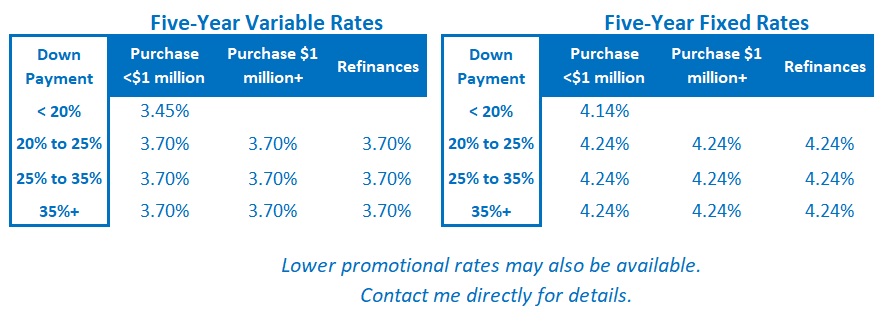
Fixed mortgage rates held mostly steady last week, while the discounts off prime offered on variable mortgage rates widened out a little.
I expect the BoC to hold its policy rate steady when it meets this week, but I also expect it to issue a more dovish-than-expected policy statement for the following reasons:
- The Bank had previously expressed a willingness to “cut the policy rate further to support economic growth” if the US imposes new trade restrictions, which it has now done.
- Our stronger-than-expected GDP result in Q2 won’t concern the BoC because our remaining output gap leaves us plenty of room for non-inflationary growth. Stats Can’s initial forecast for our GDP growth in July indicates that our stronger economic momentum in Q2 did not carry over into Q3.
- Our current inflation pressure is being driven almost entirely by higher energy prices. Our Consumer Price Index (CPI)ex-energy was 2.2% in July, and the Bank’s two key core inflation measures (CPI-trim and CPI-Median) are both now at 2%. There is no evidence yet of the “generalized inflation” the BoC has feared.
- Employment growth has rebounded over the past three months, but average wage growth has fallen steadily at the same time and is now down to 2.8% (annualized). That “soft” level of wage growth will increase the BoC’s willingness to look through our current energy-induced inflation spike.
- The steady rise in GoC bond yields has increased borrowing costs and tightened overall financial conditions. That reduces the need for BoC rate hikes on one hand and increases the BoC’s flexibility to cut on the other.
I expect the BoC to once again acknowledge the risk that spiking energy prices may lead to more generalized economy-wide inflation. But I think it will focus on the downside economic risks tied to our escalating trade war with the US and will emphasize its willingness to reduce its policy rate to a stimulative level in response.
(For reference, the BoC’s policy rate now stands at 2.25%, and by the Bank’s own estimate, it provides stimulus to our economy when it is reduced to 2% or less.)
My Take on Today’s Mortgage Options
Three- and five-year terms remain the most popular choices. The spread between these two options appears likely to widen steadily over the remainder of this year as bond-market investors push term premiums higher. For as long as that spread remains relatively narrow, I think five-year terms offer better relative value.
While I appreciate the appeal of fixed-rate stability in our current volatile environment, I continue to believe that variable rates will likely prove cheaper over their full terms.
(Important note: Anyone choosing a variable rate should do so only if they are comfortable with its inherent potential for volatility. Borrowers must also have the financial capacity to withstand higher costs and, in some cases, higher payments.)
As outlined above, I think the BoC will continue to look through our recent inflation spike because it has thus far been limited to surging energy prices. If the US/Iran war drags on and its associated inflationary impacts become broader and more entrenched, there may still come a time when the Bank will be compelled to tighten. But I don’t think we will get to that point any time soon.
At the same time, I believe our escalating trade war with the US increases the likelihood that the BoC’s next move will be a cut.
Insider’s Tip for Borrowers
This post offers mortgage advice to homeowners who are trying to work through a divorce.
It outlines some key steps that must be taken prior to removing a spouse from title and/or completing a refinancing to buy them out. It also includes several other useful tips that I have accumulated over many years of helping borrowers navigate a marital split.
Three Posts Every New Visitor to My Blog Should Read
This post provides a detailed comparison of the pros and cons of fixed- and variable-rate mortgages amidst trade-related economic uncertainty.
For myriad reasons, some of them unanticipated, many Canadians end up having to break their fixed-rate mortgages. This post provides a detailed explanation of the very different ways that lenders calculate their fixed-rate mortgage penalties. The amounts charged can vary significantly from lender to lender.
This post provides a detailed summary of the key terms and conditions to pay attention to in your mortgage contract. (They are not standard and can vary in important ways.)